Commercial Metal Roofs

Lexington Metal Roof Coating

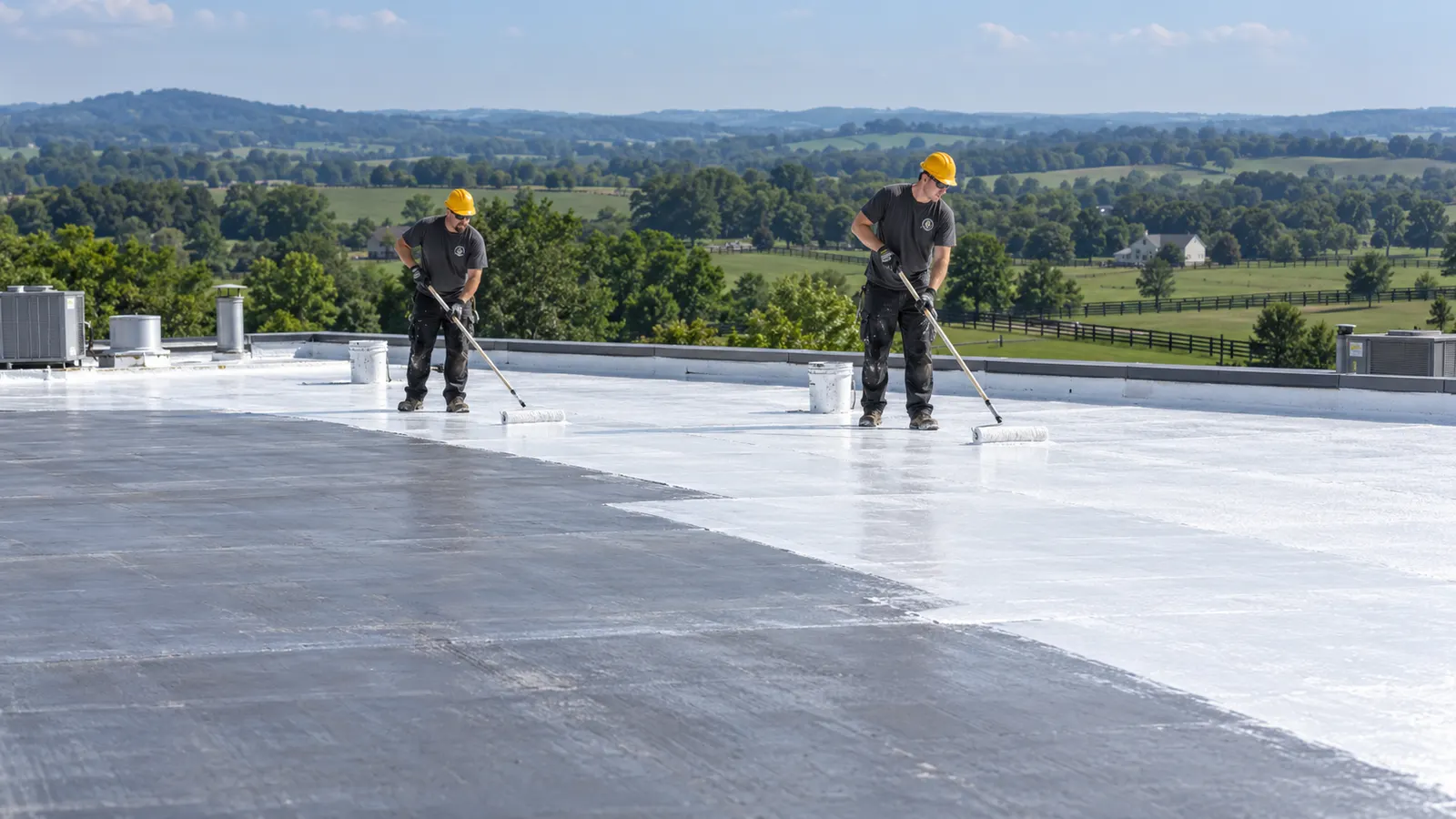
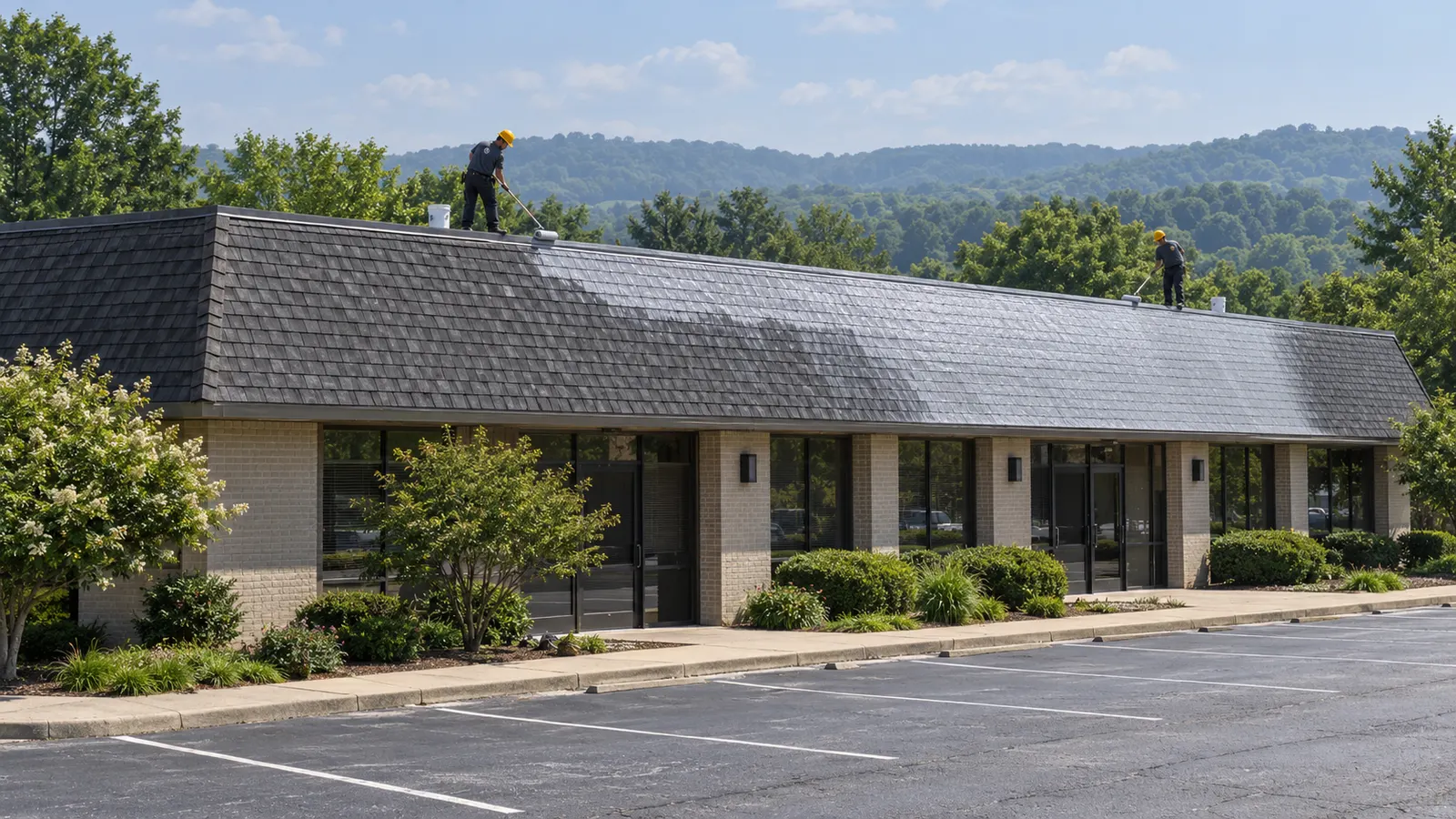
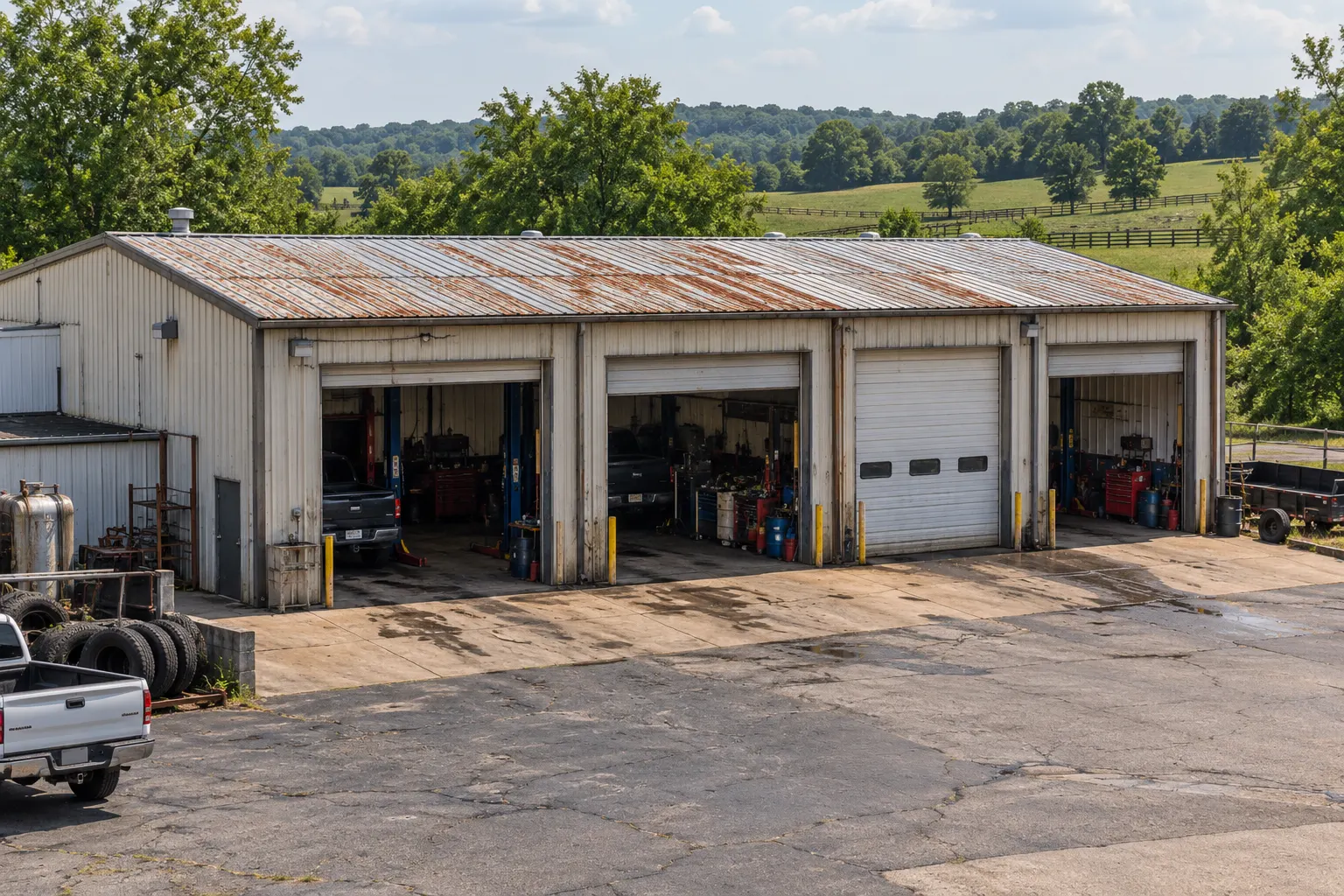
We coat commercial metal roofs on warehouses, shops, storage buildings, and horse barns across Lexington, Paris, and Hamburg, after an inspection of every panel run.

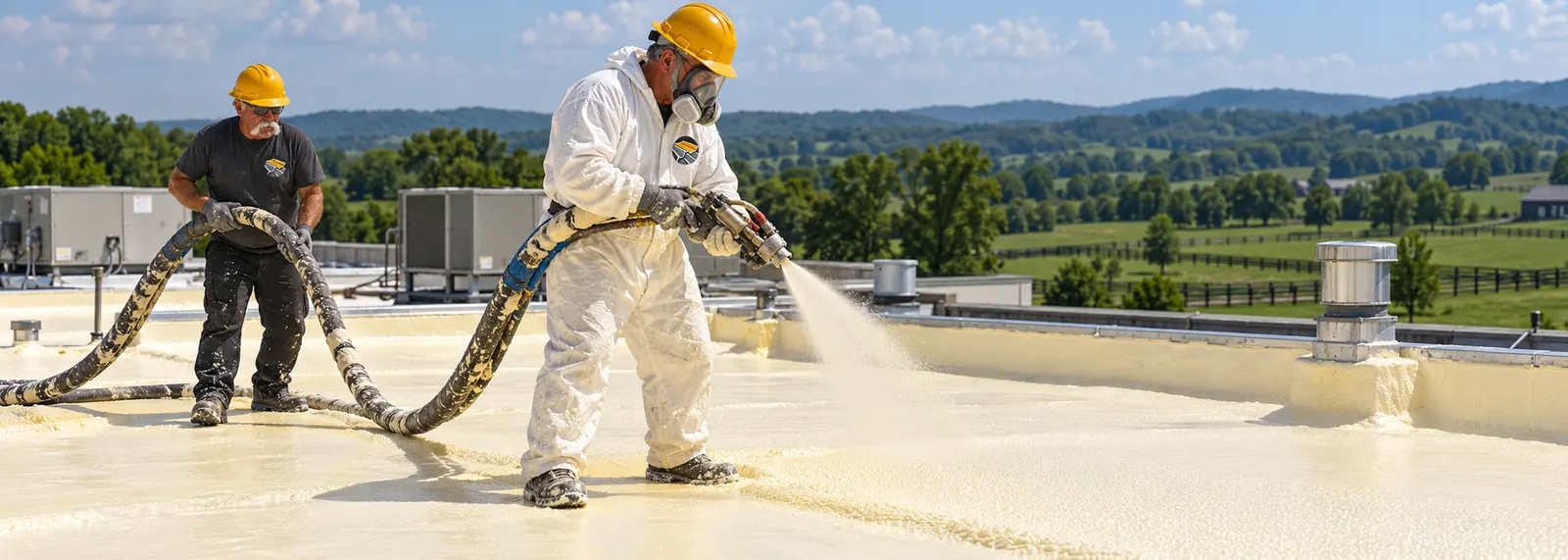
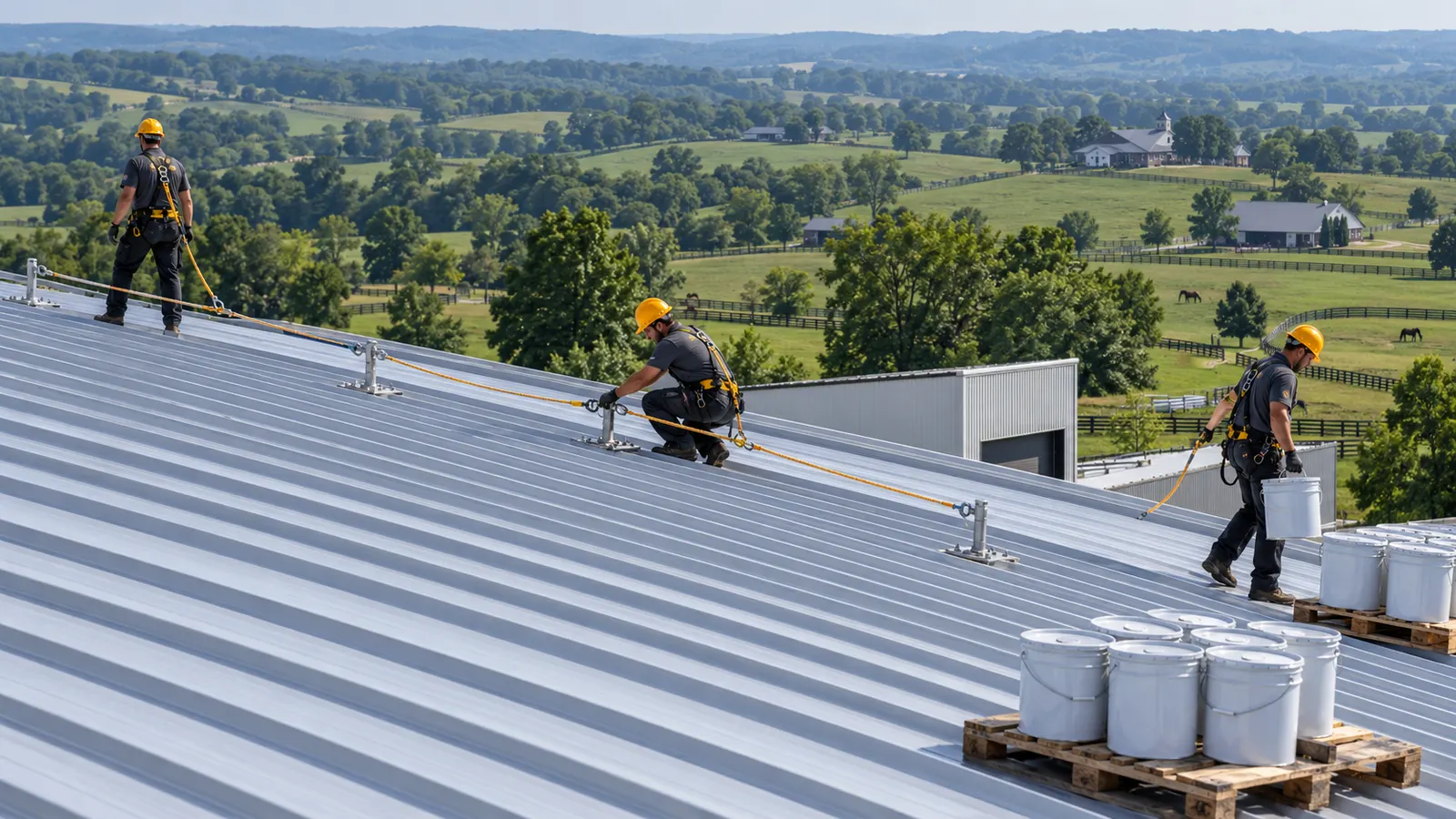
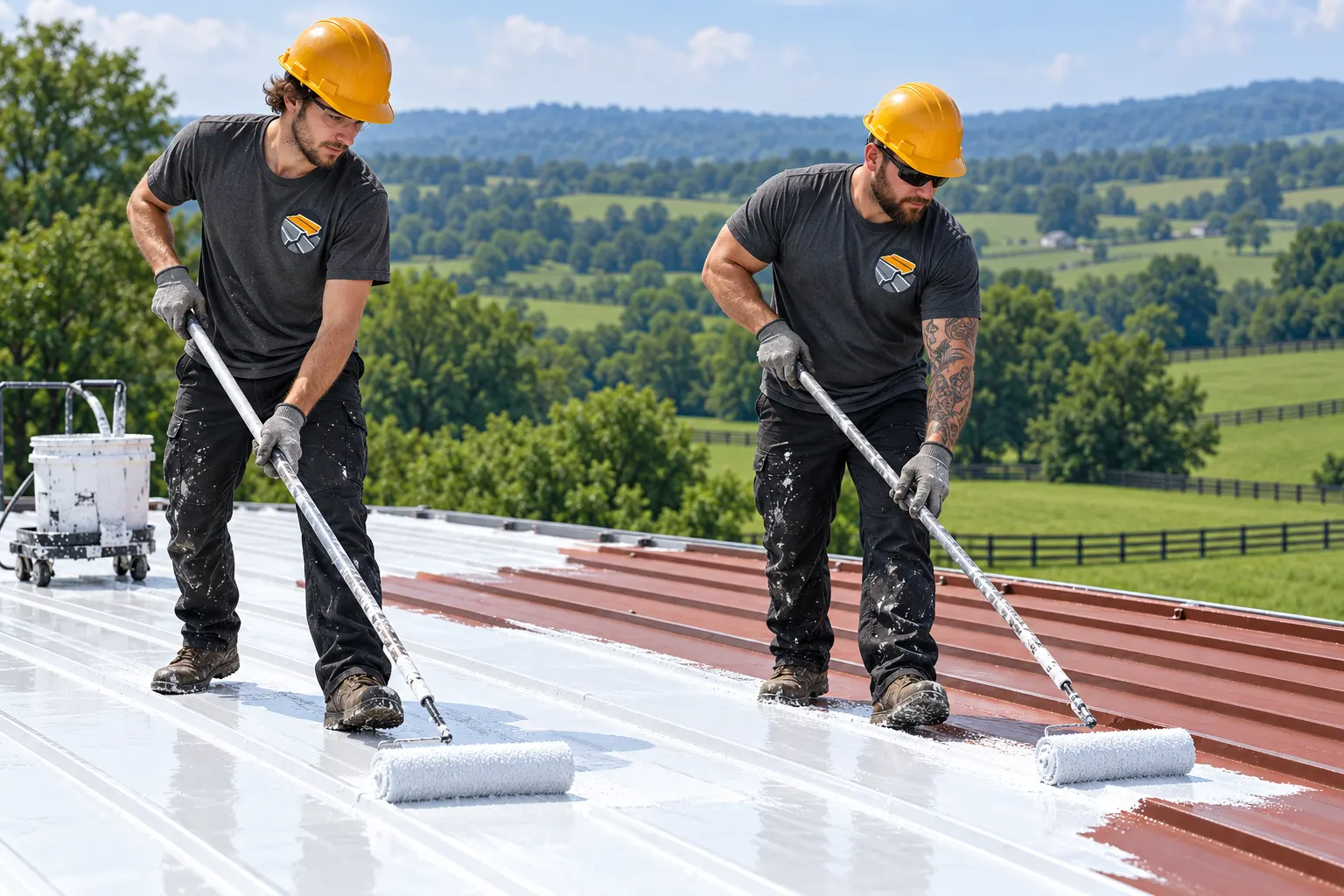
Crew in logo uniforms spraying a white coating on a commercial metal roof near Lexington, KY
  • Roof walk before any coating
  • Every screw checked and sealed
  • Laps reinforced before topcoat
  • Work staged around open buildings

Metal Roof Problems We Coat Over

Most leaks on a Lexington metal roof start at a handful of details. These are the ones we find and fix before a coat of anything goes on.

Backed-Out Screws

Summer heat and winter cold move the panels a little every day, and that motion walks screws loose. Cracked rubber washers then let water follow the screw shank into the insulation. We replace them with oversized fasteners and seal every head.
Open End Laps

Water backs up under the upper panel where two sheets overlap across the slope, especially on low-pitch roofs. Rust starts inside that joint long before it shows on top. End laps get cleaned, treated, and banded with reinforcing fabric.

Red And White Rust

Chalky white powder means the zinc layer is wearing off. Orange scale at fastener heads and eaves means the steel itself is corroding. Both get cleaned back to firm metal and primed before any coating touches them.

Clogged Box Gutters

Leaves and grit hold water against the steel for weeks, so gutter interiors rust first and overflow onto the eave panels. We clear them, flush the downspouts, and seal seams and end caps, or replace sections rusted through.

Cracked Skylight Panels

Fiberglass panels yellow, turn brittle, and leak at their laps. You can replace them with new translucent sheets, coat over them, or keep them with screens so nobody steps through during the work.

Leaks At The Ridge

Wind-driven rain pushes in under ridge caps where the foam closures have shrunk or fallen out. New closures, sealed fasteners, and reinforced cap laps close the top of the roof before the field gets coated.

Coatings We Install In Lexington

Metal roof coating is our main work, and four more systems cover the roofs around it. Each card says where that system fits best.

What Changes When A Metal Roof Is Coated

Coating changes the details that leak. Here is the same roof before and after the work, part by part.

Before Coating

  • Screw headsstanding proud of the panel with cracked washers
  • End lapsholding water and rusting inside the joint
  • Panel facechalky, faded, and spotted with rust at the eaves
  • Ridge and trimletting wind-driven rain past shrunken closures

After Coating

  • Fastenersreplaced or tightened, each head sealed under the coating
  • Lapsbanded with fabric and covered by base and top coats
  • Steelprimed where rusted and shielded from more water and air
  • Surfacea light topcoat that reflects sun and lowers panel temperature

Water Coming In, Or Planning Ahead?

Leaking Now?

Call and tell us where the water shows inside the building.

Call Us

Planning A Coating?

Start with a ballpark range for coating your metal roof.

Get A Free Ballpark Estimate

Coat It Or Replace It?

Rust depth and panel strength decide. A coating fits the roof on the left; the roof on the right needs panel or framing work first.

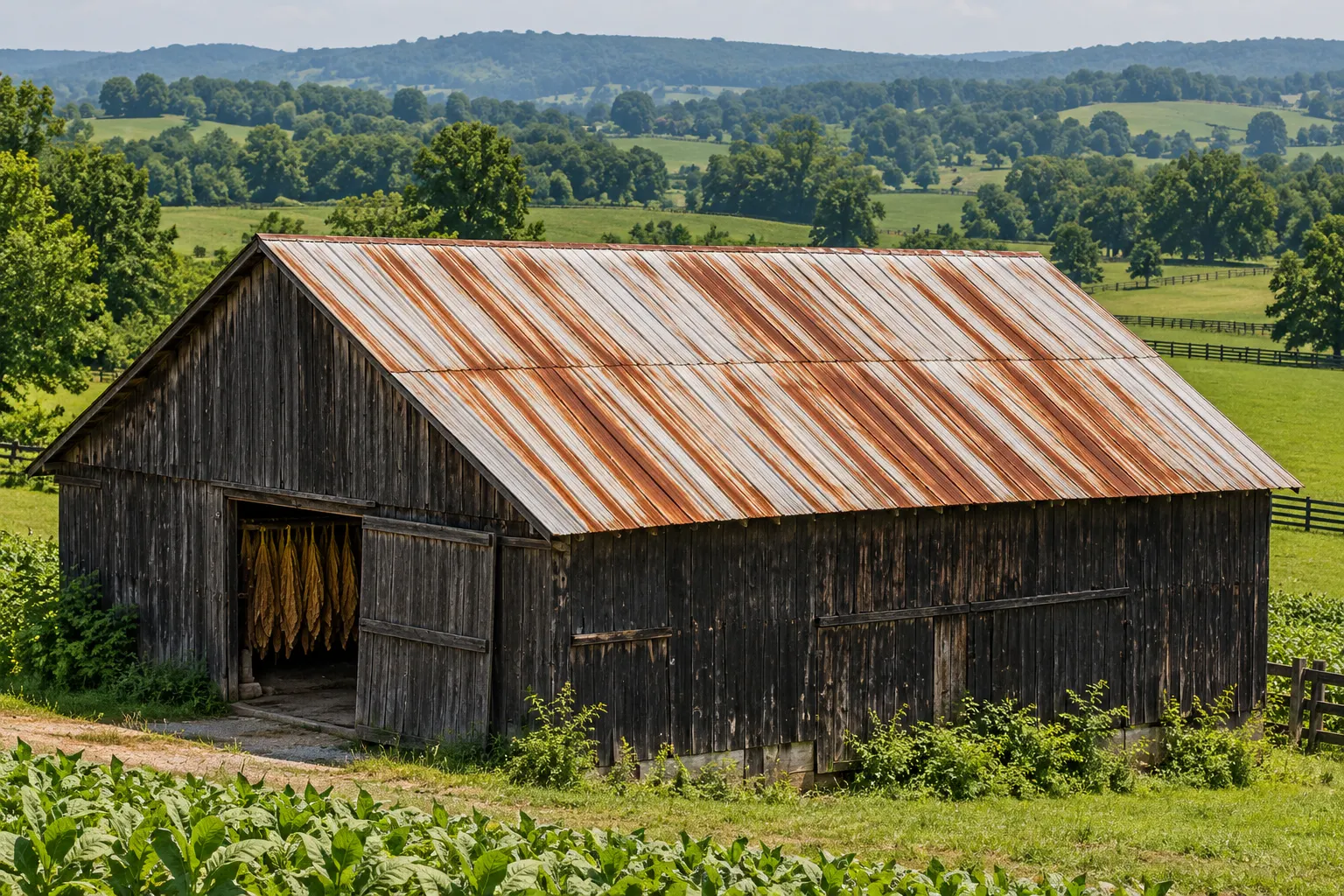
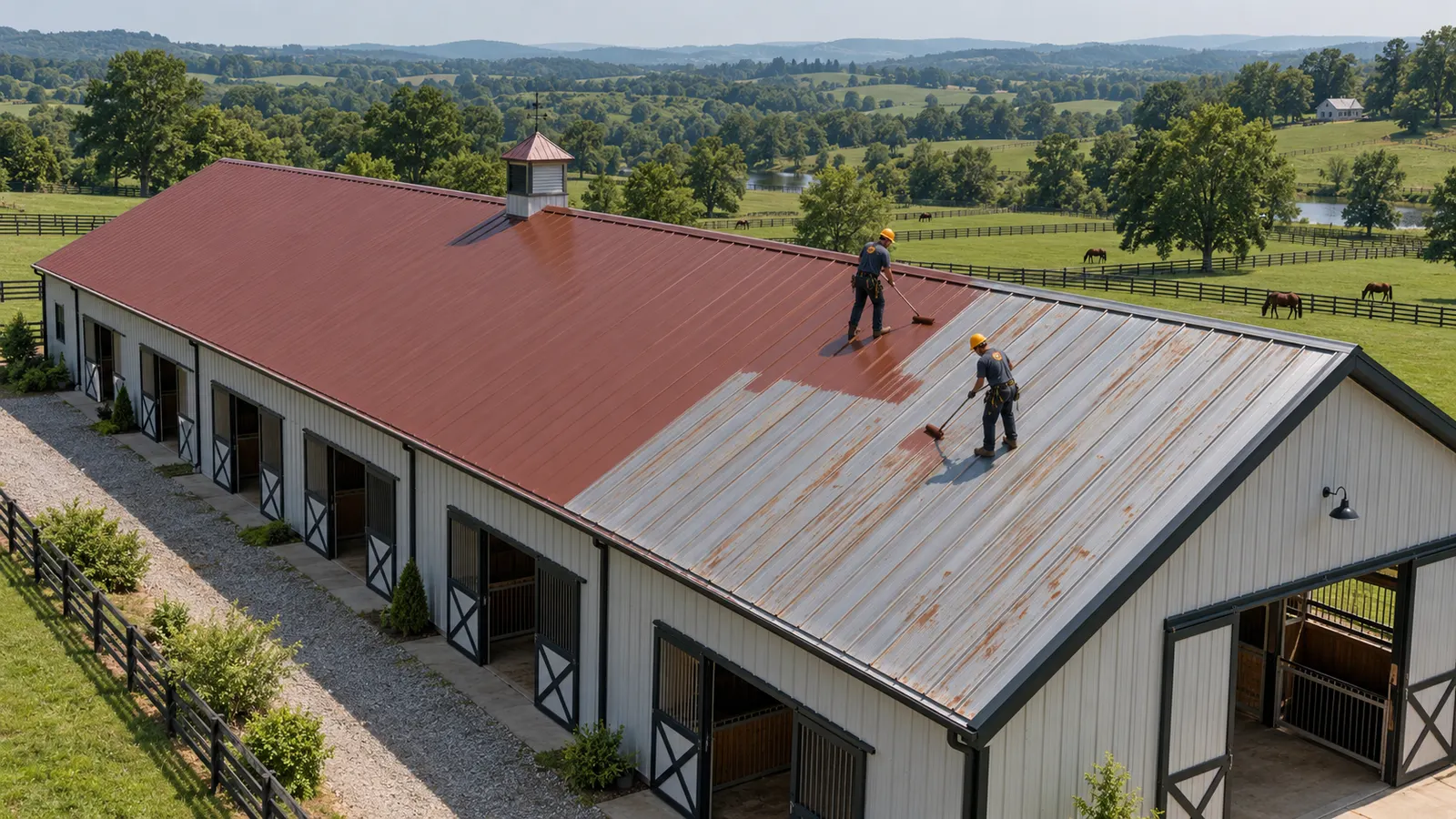
Metal-roofed commercial building in central Kentucky

Ready To Coat

Panels
Firm, attached tight to the purlins
Fasteners
Some loose, washers cracked
Rust
Surface rust and white rust
Framing
Purlins solid, no sag
Next step
Clean, prime, seal, and coat
Rusted fasteners and worn paint on an older metal roof panel

Needs Panel Work First

Panels
Soft spots or crushed by hail
Fasteners
Pulled through or stripped out
Rust
Rust-through holes over wide areas
Framing
Weak or rusted purlins
Next step
Re-panel or replace, then coat what stays

A handful of bad sheets is common. They get swapped first, and the whole roof is coated afterward.

How A Metal Roof Coating Job Runs

Five steps, in this order, on every roof we coat in Lexington.

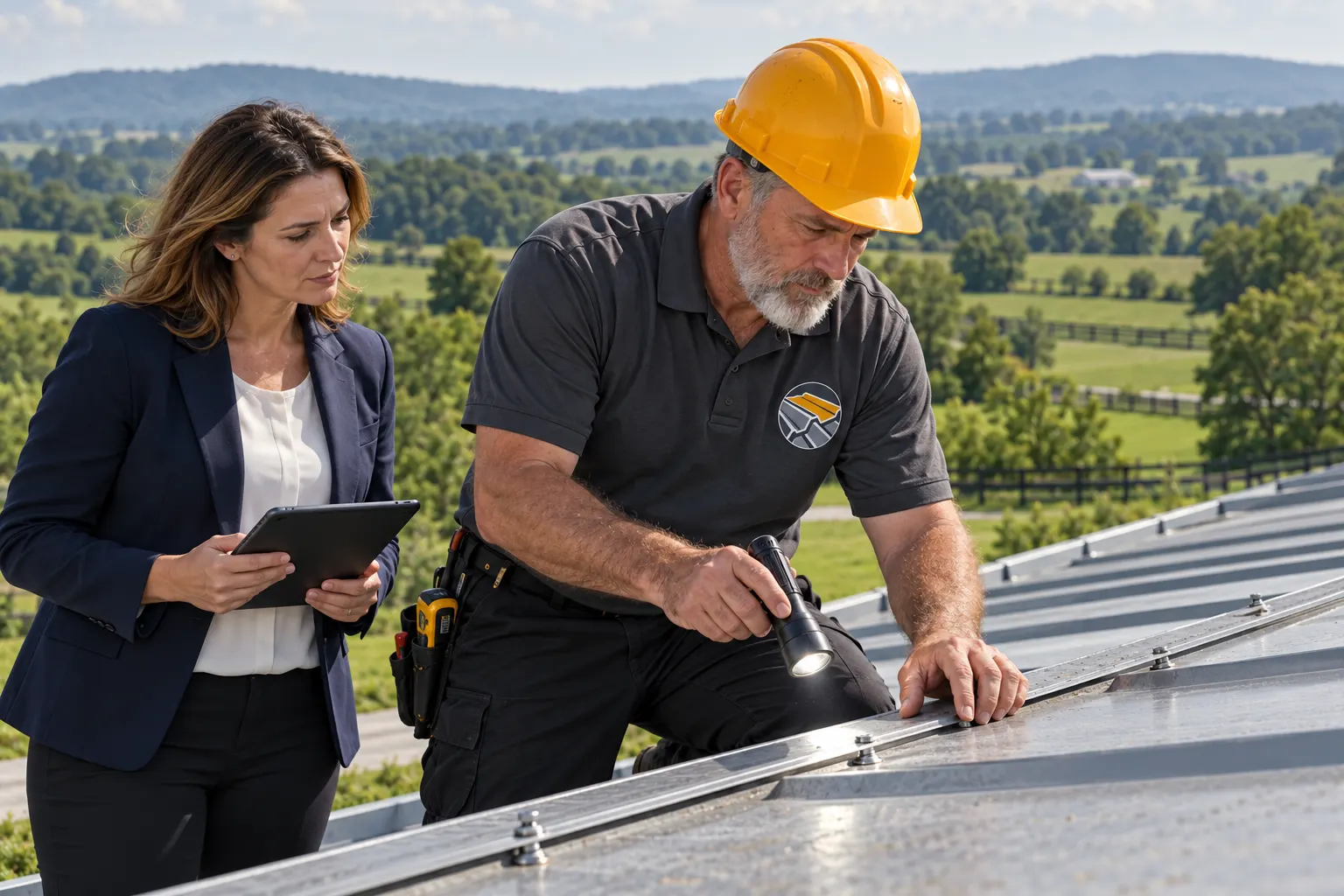
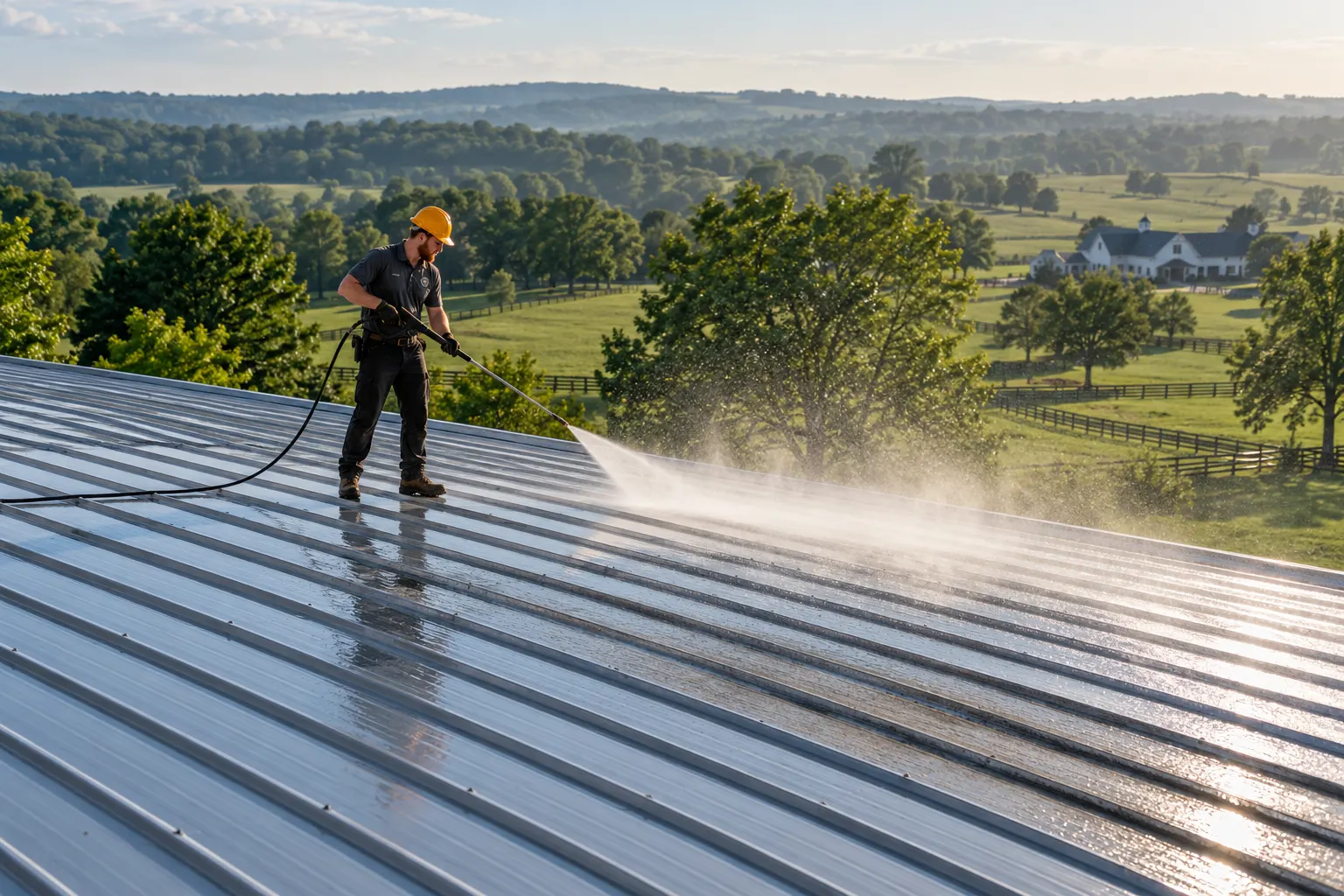
Roofer inspecting fasteners and panel laps on a metal roofCrew cleaning and priming rusted metal roof panels before coating
  1. Inspect Your Roof

    We walk every panel run, photograph fasteners, laps, skylights, ridge caps, and gutters, and look up from inside where stains show. The findings sort the roof into coat, restore, re-panel, or replace.

  2. Wash And Treat Rust

    Pressure washing takes off chalk, dirt, and white rust. Red rust at screws and eaves is wire-brushed back to tight metal, and the panels dry fully before primer goes on.

  3. Fix Fasteners And Laps

    Loose screws come out for oversized replacements with new washers. Side laps and end laps get fabric or seam tape set into a base coat, with wider bands where water backs up.

  4. Apply The Coats

    Base and top coats go on with spray rigs and rollers, built up thicker at fasteners, curbs, and ridge caps, while intakes on nearby rooftop units stay shut.

  5. Walk It With You

    After the topcoat cures, the roof gets a final walk with you to point out the reinforced laps and sealed details, and you keep the photos for your records.

Towns We Cover From Lexington

Warehouses, shops, horse barns, and retail centers in these towns are where we coat metal roofs most. Outside them? Call us or send us a message.

Coating crew staging equipment beside a commercial building before roof work
  • Lexington

    R-panel warehouses and storage buildings across Fayette County, plus barns and arenas on the farmland outside the urban area.

  • Hamburg

    Multi-tenant retail and office roofs, metal canopies, and standing seam accent roofs facing the parking lots.

  • Paris

    Downtown storefronts and Bourbon County machine sheds, many with service drops and conduit crossing the panels.

Questions From Lexington Building Owners

Short answers to what owners ask first. The full list is on our metal roof coating FAQ.

Will A Coating Stop Leaks At Screws And Laps?

Yes, once the screws and laps are repaired first. Topcoat brushed over a loose screw or an open lap splits as soon as the panels move. We tighten or replace fasteners, cap each head, and set fabric into the laps, then coat the whole roof, including curbs, pipe boots, and ridge caps.

Does Lexington Rain Matter For A Coated Roof?

It matters most where water lingers. NWS Louisville logged 49.98 inches at Lexington in 2024, close to normal, and every one of those rains crosses the eave and sits at low end laps. We add material at those spots and ask that gutters and downspouts stay clear.

What Sets The Price Of Coating A Metal Roof?

Prep, more than paint. Fastener count, rust depth, the length of laps that need fabric, and the number of skylights and penetrations drive most of the price, along with the coating system and how hard the roof is to reach. A measured roof walk comes before any firm number.

Who Handles Roof Permits In Lexington?

LFUCG's Division of Building Inspection covers all of Fayette County, so a downtown office and a shop near the county line file with the same office. Tell them whether panels, purlins, or skylights come out, and whether foam or new edge metal is planned.

What Do You Look At During The Inspection?

Every panel run. Close-up photos cover fasteners, laps, seams, skylights, ridge caps, and gutters, and we check rust depth and soft spots from the roof and from inside. On a roof with an older coating, adhesion and chalking get tested too. You see the photos before any choice is made.

Can You Coat Over An Old Roof Coating?

Often, after testing. An old coating that still grips the panels gets washed, scuffed where glossy, and patched where it peels. A small adhesion test with the new product on your actual roof shows whether it bonds; where it fails, the loose coating comes off first.

Get A Price On Your Metal Roof

Tell us the roof size and where it leaks, or call and talk it through.

Call Us (859) 204-8064